


Why Choose Allergy Blood Tests for Accurate Results: Comprehensive Guide to Allergy Diagnosis and Personalized Care
By Allergy Associates of Dearborn, Allergy Associates of Dearborn
Allergy blood tests are crucial in the diagnosis and management of allergic disease. They measure specific antibodies in the blood, notably Immunoglobulin E (IgE), which the immune system produces in response to allergens. Understanding how these tests operate and their clinical benefits enables patients to make informed decisions about care. This article reviews the main types of allergy blood tests, contrasts them with skin testing, and explains how results inform personalised treatment plans. We also outline what to expect during testing, typical costs, and common patient questions.
What Are Allergy Blood Tests and How Do They Work?
Allergy blood tests identify specific sensitivities by measuring IgE antibodies in a blood sample. When a person encounters an allergen, the immune system may produce IgE, which can trigger allergic reactions. Laboratories analyse the blood sample to detect these antibodies and clarify the patient’s allergic profile. A key advantage of blood testing is that it provides accurate results without exposing the skin to potential allergens, making it a safer option for many patients.
Further insights on the principles of allergy testing, and the distinction between in vivo and in vitro methods for Type I hypersensitivity, are provided in this comprehensive guide.
Allergy Testing Guide: Blood Tests vs. Skin Prick for IgE Reactions
This article provides a practical guide on allergy testing for physicians considering its role in patient management. It reviews basic principles, indications, and criteria for selecting appropriate tests. Allergy testing addresses type I (immediate) and type IV (delayed) hypersensitivity. Type I reactions are assessed by skin prick testing (in vivo) or serum-specific IgE testing (in vitro); type IV reactions are evaluated with patch testing. Identifying the causative allergens aids in implementing avoidance measures.
Overview of component resolved diagnostics, 2013
Understanding IgE Antibody Testing and Its Role in Allergy Detection
IgE antibody testing is a core element of allergy blood testing because it reflects the immune response to specific allergens. When allergens bind to IgE, they can prompt histamine release and other mediators that produce allergic symptoms. Measuring specific IgE levels helps clinicians identify the allergens responsible for a patient’s symptoms. This testing is particularly valuable for diagnosing food allergies, environmental allergies, and insect‑sting allergies and supports targeted management strategies.
Expert insights further emphasize the role of serum IgE testing in diagnosing IgE‑mediated food allergy alongside clinical history.
Diagnosing IgE-Mediated Food Allergy with Serum IgE Tests
The diagnosis of IgE‑mediated food allergy requires a compatible clinical history and evidence of food‑specific IgE by skin‑prick or serum testing. Clinical presentations range from mild to severe. Specific IgE levels or skin‑test wheal size do not predict symptom severity, though higher levels correlate with greater likelihood of reactivity. A diagnosis can be excluded if the patient ingests the suspected food without symptoms; in some cases, an in‑office oral food challenge is necessary when serum or skin testing is negative or low.
IgE-mediated food allergy, S Anvari, 2019
Types of Allergy Blood Tests: From Basic Panels to Component-Resolved Diagnostics
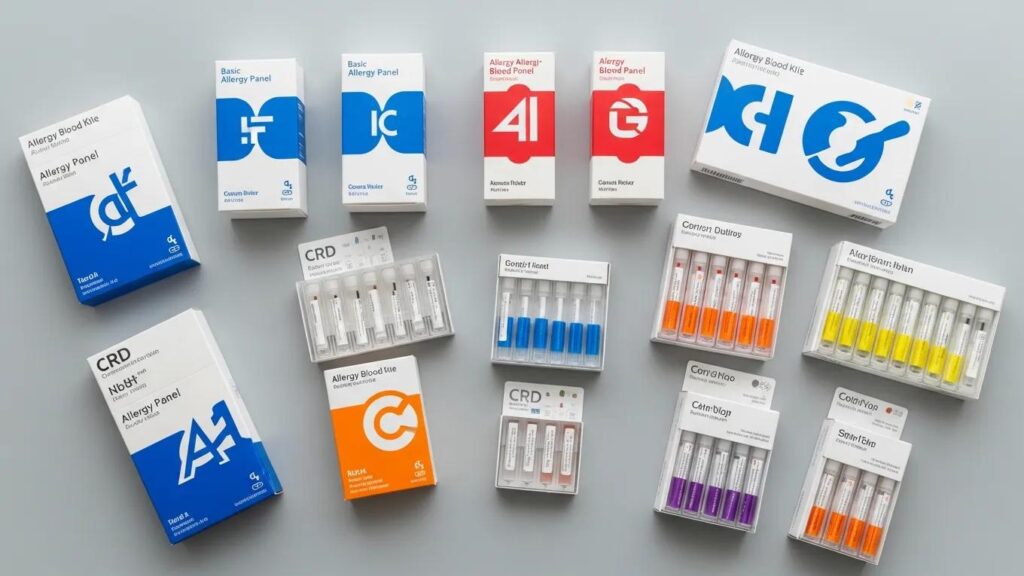
Several types of allergy blood tests are available, each serving a distinct clinical purpose. Basic panels screen for common allergens such as pollen, dust mites, and pet dander. Component‑resolved diagnostics analyse specific proteins within allergens and can help distinguish true sensitisation from cross‑reactivity. Advanced testing offers a more detailed sensitivity profile that can guide clinical decisions about management and therapy.
This overview further describes how component‑resolved diagnostics identify specific allergen molecules and support more personalised care.
Component-Resolved Diagnostics for IgE Allergy: Accurate Diagnosis & Personalized Care
Component‑resolved diagnostics (CRD) use purified native or recombinant allergens to detect IgE sensitivity to individual allergen molecules and are increasingly important in clinical evaluation of IgE‑mediated allergy. This overview describes recent CRD developments, including multi‑array systems. It emphasises cross‑reactions among allergen families (for example, Bet v 1 homologues). In pollinosis, hymenoptera venom allergy, and certain food allergies, CRD can help distinguish clinically relevant from irrelevant sIgE results and define sensitisation patterns with prognostic value (for example, storage‑protein sensitisation linked to severe peanut reactions). Further recombinant allergen diagnostics under development may improve risk molecule identification. Overall, CRD can reduce the need for provocation testing and enhance the specificity of allergen‑specific immunotherapy.
Overview of component resolved diagnostics, 2013
| Test Type | Description | Applications |
|---|---|---|
| Basic Allergen Panel | Tests for common allergens | General allergy screening |
| Component-Resolved Diagnostics | Identifies specific proteins in allergens | Detailed allergy profiling |
| Food Allergy Blood Test | Focuses on IgE levels related to food allergens | Diagnosis of food allergies |
This comparison underscores the importance of selecting the appropriate allergy blood test to achieve an accurate diagnosis and effective management plan.
How Do Allergy Blood Tests Compare to Skin Allergy Testing?
Allergy blood tests provide several advantages over traditional skin prick testing. Skin testing requires direct exposure of the skin to allergens and may cause discomfort or, rarely, severe reactions; blood testing avoids that exposure by analysing a blood sample. This safety profile is particularly relevant for patients with prior severe reactions or with skin conditions that limit skin testing.
Advantages of Blood Tests Over Skin Prick Tests for Accurate Diagnosis
Blood tests offer a comprehensive assessment of allergic sensitisation without provoking an immediate reaction. They are less affected by medications such as antihistamines and can often be performed regardless of current medication, improving convenience. These characteristics make allergy blood tests a reliable component of the diagnostic workup.
When Is an Allergy Blood Test Preferred? Patient Safety and Convenience Considerations
Allergy blood tests are preferred when patients have a history of severe allergic reactions, have skin conditions that complicate skin testing, or require simultaneous testing for multiple allergens. They are also commonly used for children who are anxious about skin testing and for patients on medications that would interfere with skin tests. Discussing these factors with a healthcare provider helps determine the optimal testing approach for each patient.
How Do Allergy Blood Tests Improve Personalized Treatment Planning?

Allergy blood test results play a central role in developing personalised treatment plans. By identifying specific allergens, clinicians can tailor interventions to the patient’s needs. This targeted approach enhances the effectiveness of strategies such as immunotherapy and helps reduce the risk of future allergic reactions.
Using Test Results to Guide Immunotherapy and Preventive Care Strategies
Results from allergy blood tests inform the design of immunotherapy regimens intended to desensitise patients to identified allergens over time. By knowing which allergens trigger symptoms, clinicians can develop a customised schedule of gradual exposure to reduce sensitivity. This proactive strategy aims to relieve symptoms and improve quality of life.
Case Examples: Tailoring Allergy Management Based on Blood Test Findings
Clinical examples demonstrate the value of tailored management based on blood test findings. For example, a patient with confirmed peanut allergy may receive specific dietary guidance and a written emergency action plan, while a patient with environmental allergies may be offered targeted immunotherapy. These approaches illustrate how precise testing supports more effective care and better outcomes.
What Should Patients Expect During Allergy Blood Testing?
Patients undergoing allergy blood testing can expect a straightforward process that involves a standard blood draw. Clear information about the procedure and timing can help reduce anxiety associated with testing.
Preparing for Your Allergy Blood Test: Guidelines and Recommendations
Prior to testing, patients should follow their clinician’s instructions to ensure accurate results. It is commonly recommended to avoid antihistamines and certain medications for several days before the test, as these can affect IgE measurements. Inform your healthcare provider of existing medical conditions and current medications to ensure safe and effective testing.
Interpreting Allergy Blood Test Results: What Patients Need to Know
After testing, patients receive results that indicate the presence and levels of specific IgE antibodies. Clinicians will explain which allergens were detected and the clinical significance of those findings. Understanding the results enables patients to make informed decisions about treatment options and lifestyle adjustments.
What Are the Costs and Accessibility of Allergy Blood Tests?
The cost of allergy blood testing varies depending on the type of test and the laboratory performing the analysis. Awareness of these financial factors is important for patients considering testing.
Understanding Allergy Blood Test Pricing and Insurance Coverage
Pricing ranges from lower-cost basic panels to higher-cost component‑resolved diagnostics. Many insurance plans provide coverage for allergy testing; patients should verify their individual benefits to determine any out-of-pocket expenses. Transparent information on costs supports effective planning for testing and treatment.
Accessing Allergy Testing Services in Metropolitan Detroit with Dr. Roula Daher
For residents of metropolitan Detroit, Allergy Associates of Dearborn, led by Dr. Roula Daher, offers comprehensive allergy testing services. Patients may request appointments and access trusted medical information on allergy conditions. The practice emphasises personalised care and provides treatment options based on each patient’s unique allergy profile.
What Are Common Patient Questions About Allergy Blood Tests?
Patients commonly ask about the accuracy and reliability of allergy blood tests compared with other methods. Addressing these questions helps build confidence in the testing process and supports informed decision‑making.
How Accurate Are Allergy Blood Tests Compared to Other Methods?
Allergy blood tests are generally accurate and, in many cases, provide results comparable to skin prick testing. Accuracy depends on the allergens evaluated and individual patient response. It is important to review results and testing options with a healthcare provider to determine the best approach for each case.
How Long Does It Take to Receive Allergy Blood Test Results?
Patients typically receive allergy blood test results within 1–2 weeks after the sample is processed. This interval allows timely planning for treatment and management. Maintain communication with your healthcare provider to review results and next steps promptly.
If you are managing food allergies, understanding the nuances of testing and long-term management is essential. Allergy Associates of Dearborn provides comprehensive support for diagnosing and managing a range of allergic conditions.
Frequently Asked Questions
What should I do if I have a reaction after an allergy blood test?
Allergy blood tests themselves do not introduce allergens and are considered safe. Minor effects from the blood draw, such as bruising or local discomfort, may occur. If you experience severe symptoms—difficulty breathing, significant swelling, or other emergency signs—seek immediate medical attention. Inform your healthcare provider about any reactions so they can advise on your care plan.
Can allergy blood tests be used to diagnose multiple allergies at once?
Yes. Allergy blood tests can assess multiple potential allergies from a single blood sample. Basic panels screen for common allergens, while component‑resolved diagnostics can detect IgE to specific proteins within allergens. This capability allows clinicians to evaluate multiple sensitivities efficiently; discuss test selection with your provider.
Are there any risks associated with allergy blood tests?
Risks associated with allergy blood testing are minimal and primarily relate to the blood draw itself—temporary pain, bruising, or minor bleeding at the puncture site. Because no allergens are administered, there is no risk of an induced allergic reaction during testing. Patients with bleeding disorders or those taking anticoagulants should notify their healthcare provider prior to testing.
How do I prepare for an allergy blood test?
Preparation usually involves avoiding antihistamines and certain medications for a few days before testing, as they can affect IgE measurements. Inform your healthcare provider about any medical conditions and medications you are taking. Follow the specific instructions provided to ensure accurate results.
What do the results of an allergy blood test mean?
Results indicate the presence and levels of specific IgE antibodies in the blood, which reflect sensitivity to particular allergens. Higher IgE levels suggest a greater likelihood of an allergic response to that allergen. Your healthcare provider will interpret the results in the context of your symptoms and recommend an appropriate management plan.
Can children undergo allergy blood tests?
Yes. Children can safely undergo allergy blood testing and often tolerate it better than skin prick tests. Blood tests are frequently preferred for children who are anxious about skin testing or who have a history of severe reactions. Parents should discuss their child’s needs with a healthcare provider to determine the best testing approach and to ensure the child’s comfort.
Conclusion
Allergy blood tests offer a safe and accurate method to diagnose allergies and support personalised treatment planning. By measuring specific IgE antibodies, these tests identify relevant allergens and guide effective management strategies. Understanding the role and benefits of allergy blood testing enables patients to make informed choices about their care. Schedule a consultation to review testing options tailored to your needs.